
Clown House




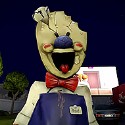

Clown House looks like a slow-burn horror walk through a single house, but it plays like a survival scramble against a stalker who reacts to every sound you make. The premise sounds contained — one location, one objective — but the White Clown patrolling that house turns a simple search-and-burn task into a constant risk calculation.
| Genre | First-person survival horror with stealth |
| Objective | Locate and burn all 6 clown boxes |
| Antagonist | The White Clown |
| Controls | First-person movement with jump, crouch, and sprint |
Finding the Six Clown Boxes in Clown House
The core objective in Clown House is straightforward on paper: locate all six clown boxes hidden throughout the house and burn them, using fuel and a firelighter carried for that exact purpose. Getting there is the hard part. The boxes aren't grouped together or marked on any visible map, which means exploring room by room while the White Clown is actively roaming the same space.
Fuel and firelighter items are limited enough that burning a box isn't something a player can do carelessly — running back for more supplies mid-search adds exposure time in a house where every extra minute is another chance for the White Clown to close in. Handgun ammo is scattered around as well, giving players a way to fight back rather than only hide, though using it draws attention the way any loud action would.
Staying Undercover From the White Clown
The White Clown isn't a scripted jump-scare trigger; it reacts to noise and can open doors a player hasn't locked, which means "hiding" in Clown House is never a guaranteed solution the way it might be in a simpler horror game. Distraction items scattered through the house exist specifically to redirect its attention, buying a window to move through a room or grab an item without a direct confrontation.
Key items unlock doors that would otherwise seal off sections of the house, and locking a door behind you after passing through is one of the few tools a player has to slow the White Clown down rather than just avoid it. Players who ignore locking mechanics tend to find the White Clown catching up faster than expected, since an open door is an open door for it too.
- Distraction items redirect the White Clown's attention away from your position temporarily.
- Locking doors behind you is one of the only ways to actively slow pursuit rather than just avoid detection.
The ClownEvent Sequences
Burning a clown box doesn't just check a box off a list — it triggers a ClownEvent, a dream-state sequence that teleports the player to a different area entirely, where the White Clown runs directly at them. Surviving a ClownEvent means killing or stunning the Clown within that sequence to end it and return to the house, rather than simply evading until time runs out.
These sequences change the rhythm of a run completely. Where the main house rewards quiet movement and careful pathing, a ClownEvent forces a direct confrontation with no stealth option available, and players who've built their whole strategy around avoidance have to switch gears fast once the first box goes up in flames.
- Burn a clown box using fuel and the firelighter once located.
- Survive the resulting ClownEvent by stunning or killing the Clown that appears.
- Return to the house and resume searching for the remaining boxes, with difficulty rising each time.
Why Clown House's Ending Stretch Hits Harder
Clown House gets noticeably harder as a run approaches its end, and burning the later clown boxes carries more risk than the earlier ones simply because the player has less breathing room left — fewer distraction items, less ammo, and a White Clown that's already been triggered by several ClownEvents. Community reaction to the game is split on how well that escalation is paced: some players find the tension-building effective, while others feel the game's simple concept doesn't have enough new tricks to fully justify the extra difficulty stacked onto the final boxes.
What both sides tend to agree on is that Clown House commits fully to its one idea instead of padding it out. Six boxes, one stalking threat, and a set of tools just limited enough to make every choice about when to fight, hide, or run feel like it actually matters.
By the time the sixth clown box goes up in flames and the last ClownEvent ends, Clown House has stopped being about exploring a spooky house and turned into a full test of whether a player can keep their nerve while the White Clown is still listening for the next mistake.